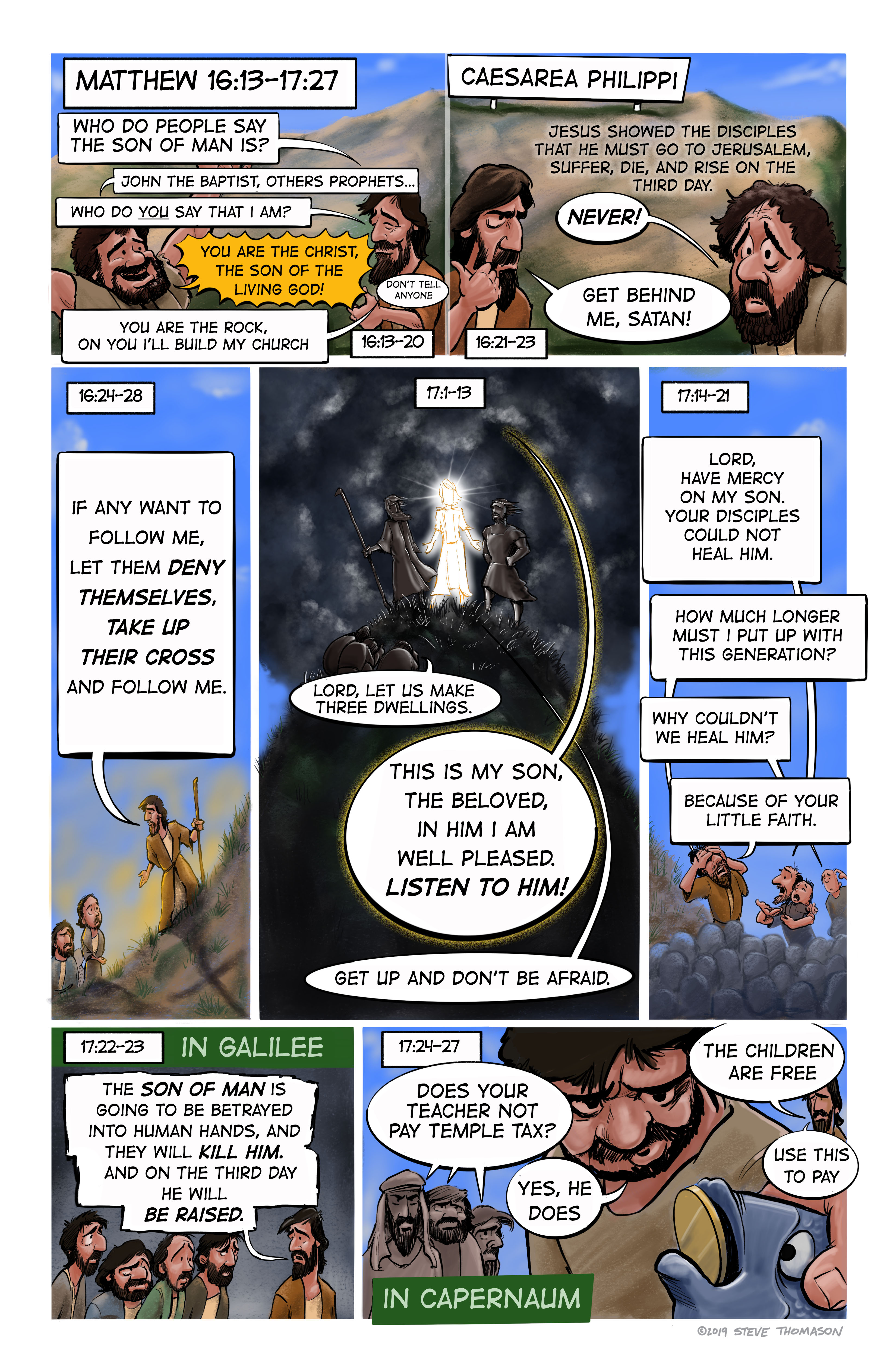
Matthew 16:13-17:27
Page 12
Preview the PowerPoint
Visual Commentary
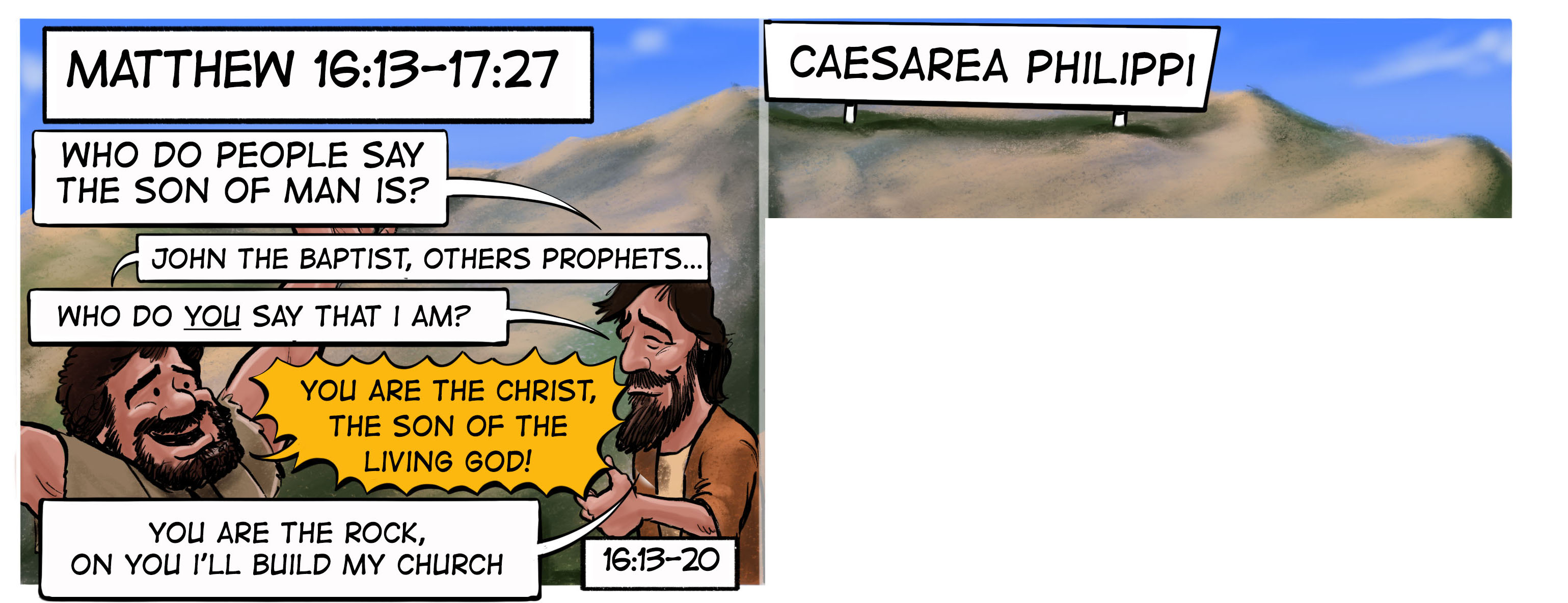
Matthew 16:13-20
I made this image when studying this story in Mark 8:27-9:8, but it it is helpful for the context of Caesarea in Matthew’s account as well.
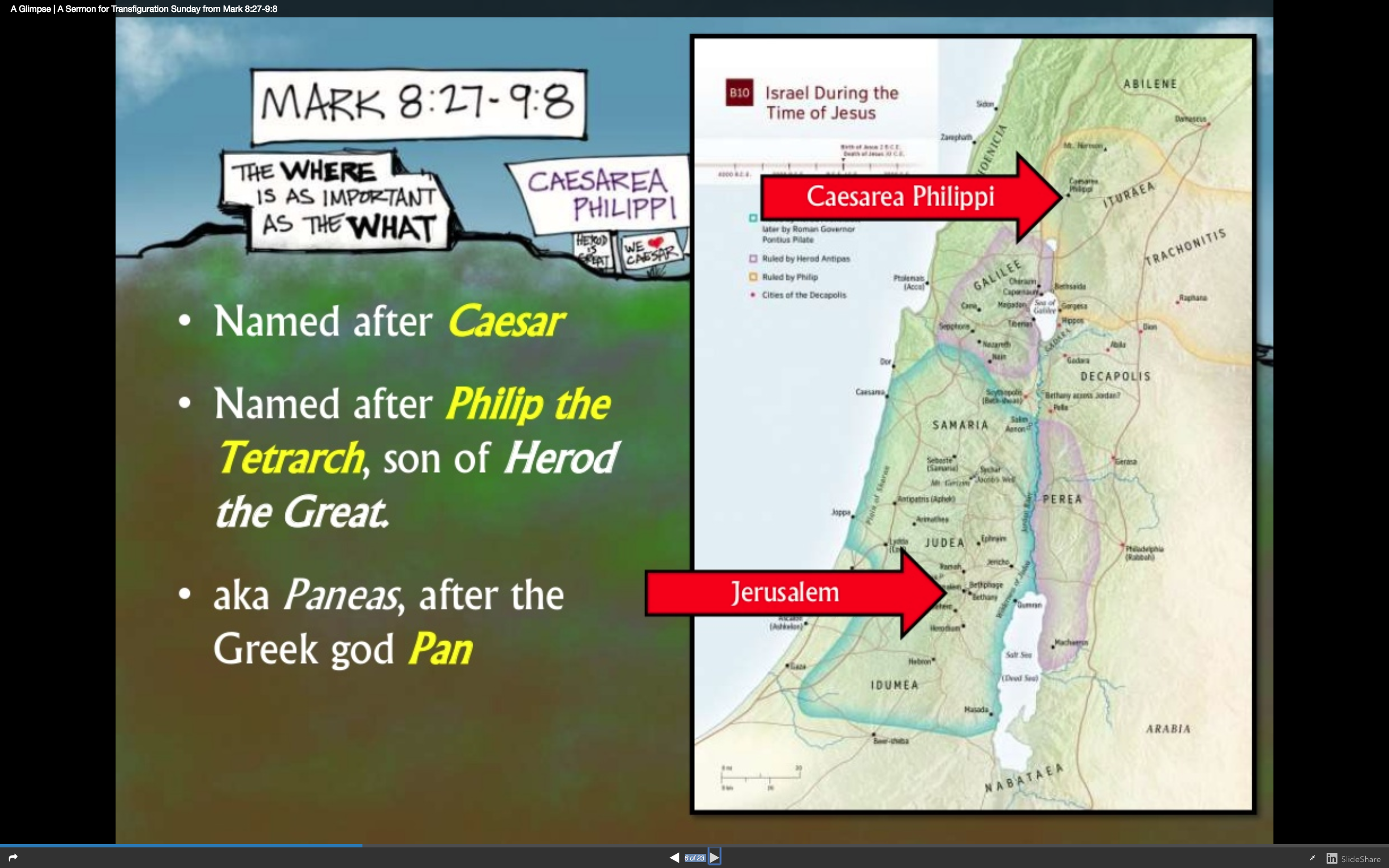
Some important things to note about the location of this story:
- There is a cave at the base of the mountain filled with water.
- The Greeks had a shrine to Pan at the cave, because Pan was able to pass to Hades and return. This cave was a “gate to Hades” the undeworld and land of the dead.
- The spring in this cave is the headwaters of the Jordan River.
- Around 20 BCE, Herod the Great built a white marble temple (Augusteum) dedicated to Caesar Augustus at the mouth of the cavern.
- Philip the Tetrarch (Herod the Great’s Son) expanded the sanctuary to include open-air courts, shrines to Pan and Echo, and niches carved directly into the cliff face (which remain visible today).
In other words, this location was a focal point for many claims of divine power to cross from the land of the living to the land of the dead and return. It seems that Jesus is establishing himself among, and above, these theological claims by having this conversation, and subsequent transfiguration, in this location.
Matthew 16:21-23
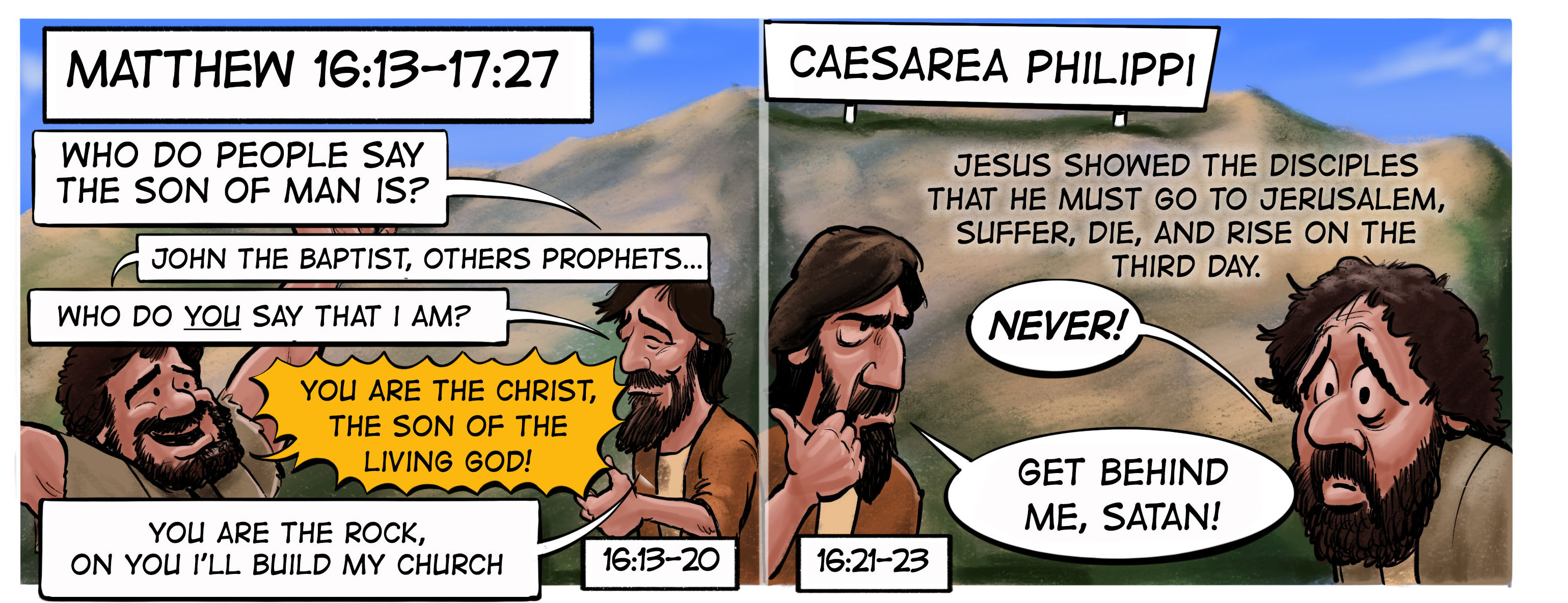
Matthew 16:24-28
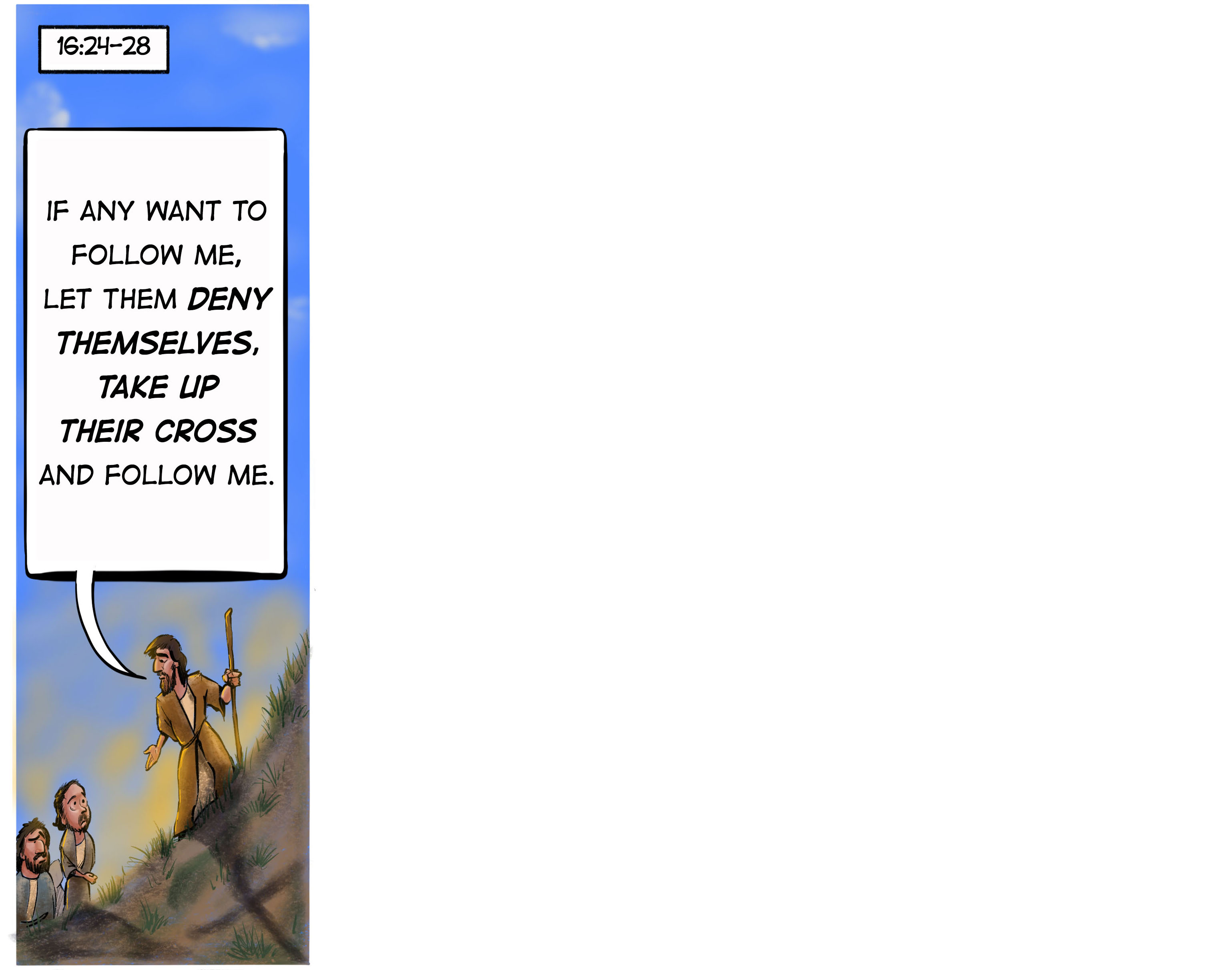
Matthew 17:1-13

Jesus takes Peter, James, and John to the top of a mountain and is transfigured before them. This story is told in the Gospels of Matthew, Mark, and Luke. Each have their own perspective on it.
A Cartoonist’s Guide to the Transfiguation combines all three of these stories into one convenient PowerPoint and Image Pack. Feel free to mix and match these images to create the most impactful and creative way to enhance your own teaching of this story.
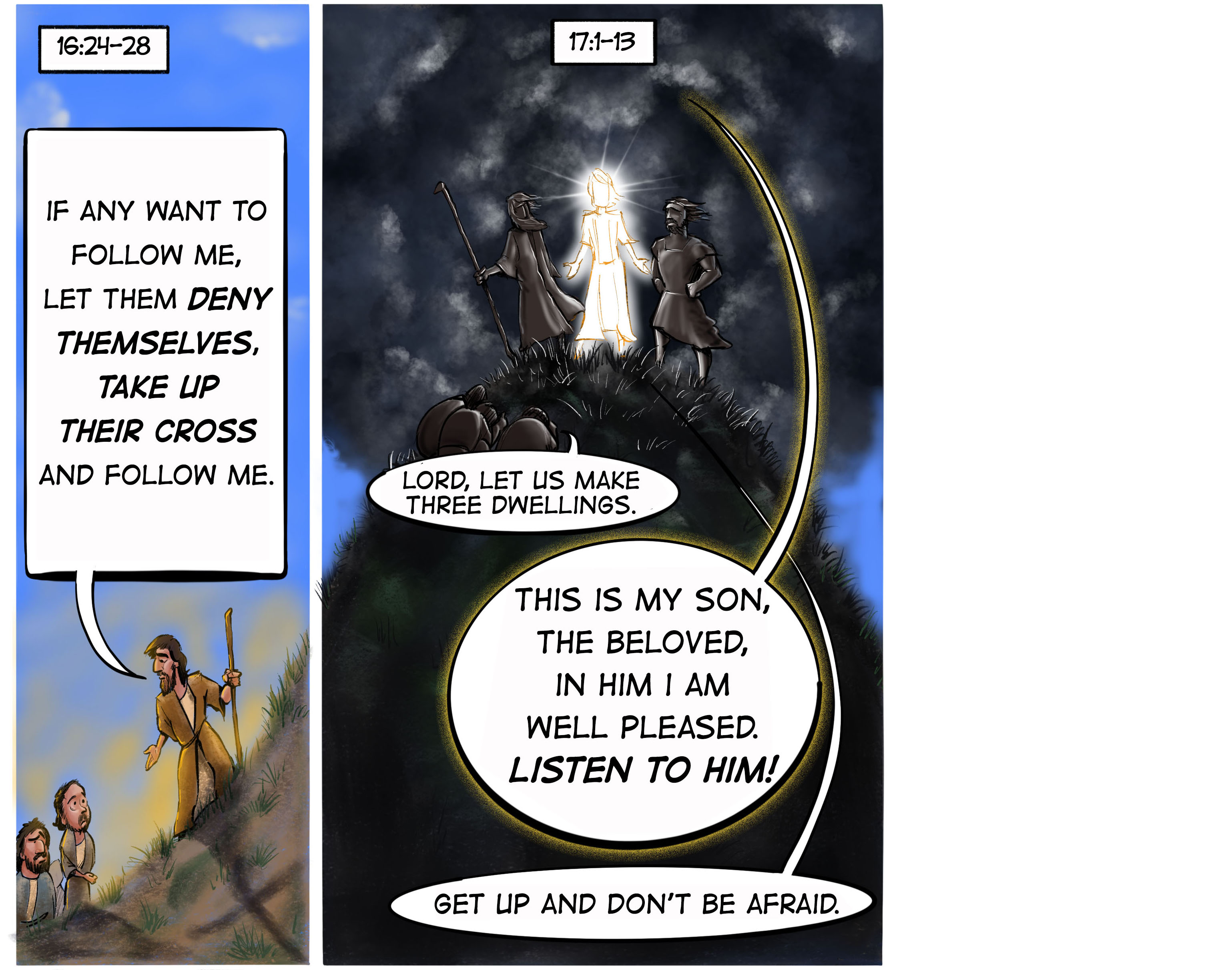
Matthew 17:14-21
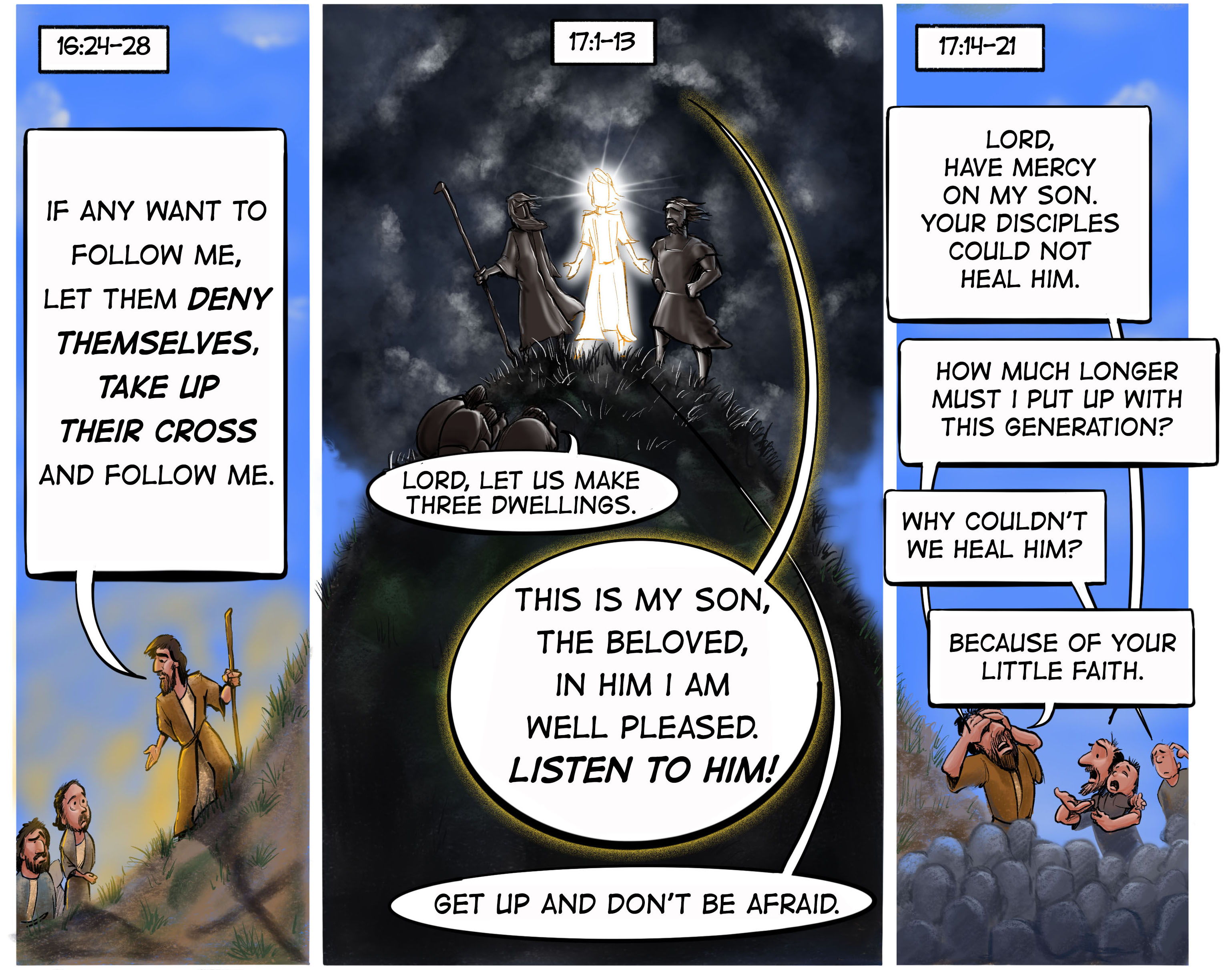
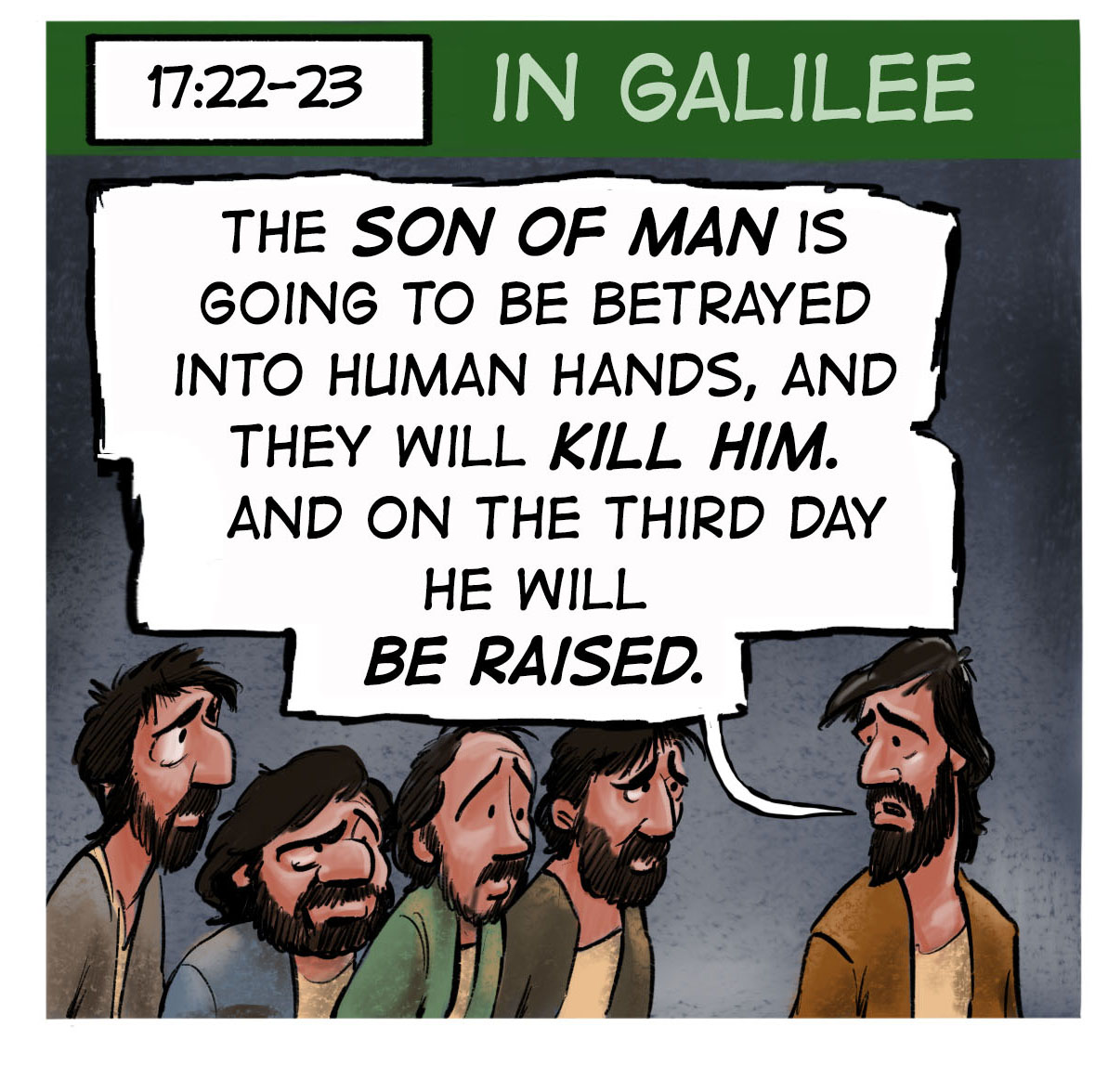
Matthew 17:22-23
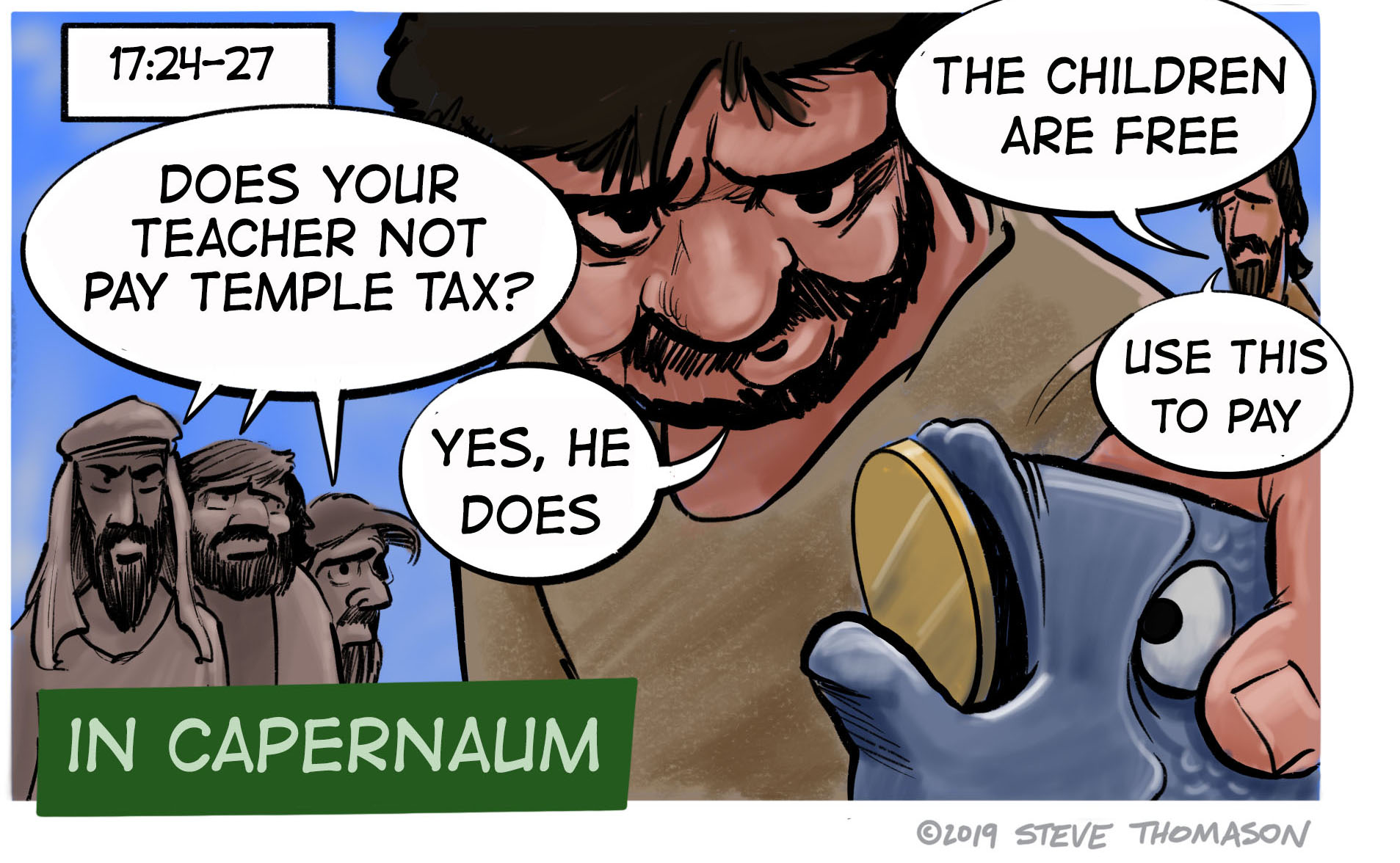
Matthew 17:24-27